
| Indian Ghost Tree |

|
 |

|


| File size | 275611 |
| Original date | 1/10/10 10:29 AM |
| Resolution | 924 x 693 |
| Flash | Flash did not fire, auto |
| Focal length | 6.0mm |
| Exposure time | 1/160s |
| Aperture | 6.3 |
| Focus Distance | |
| Metering Mode | Multi-segment |
| Camera make | Canon |
| Camera model | Canon PowerShot S5 IS |
| Sensor type | OneChipColorArea |
 |
 ative ative |
 |
 |
Photo: |
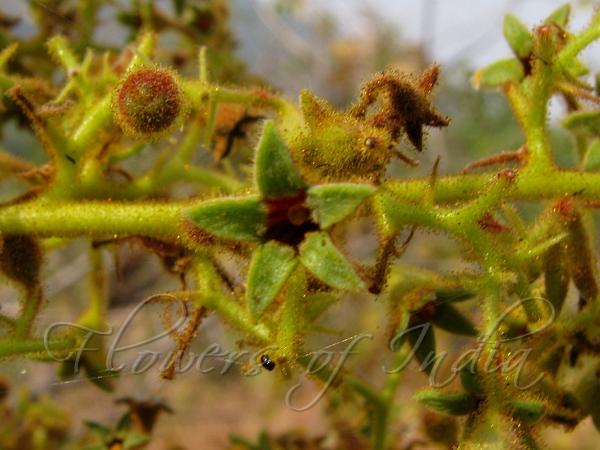
Botanical name: Sterculia urens Family: Sterculiaceae (Cacao family)
Indian Ghost Tree is a medium-sized, deciduous tree to 15 m in height,
usually with a clean, crooked, short bole up to 2 m DBH; branches large,
spreading; bark thick, greyish-white or reddish, smooth, shining with a
thin, white transparent outer coat, peeling off in papery flakes. The
tree gets its spooky name because its smooth, whitish-yellow bark
shines brilliantly in the dark, giving it a ghost-like appearance in
the jungle. Leaves on long stalks, crowded at the ends of branches,
palmately 5-lobed, 20-30 cm diameter; woolly beneath, hairless above,
entire, tapering; stipules falling off. Flowers are greenish yellow, small,
borne at branch-ends, in panicles.
The specific name urens means stinging in reference to the hairs
on flowers. Fruit consists of 5 stalkless, radiating, ovate-lanceshaped
hard, leathery carpels, 7.5 cm long, red when ripe, covered outside with
many stiff bristles. Trees exude gum karaya used in foodstuffs as emulsifiers,
stabilizers and thickeners. Seeds are eaten after roasting. Seeds and
young tender roots are eaten in times of famine.
| Identification credit: Dinesh Valke, Prashant Awale | Photographed in Maharashtra & Kerala. |
• Is this flower misidentified? If yes,